
Handling molten metals in industrial settings presents several challenges. These metals reach exceptionally high temperatures, necessitating advanced insulation and cooling to prevent equipment damage. Their reactive nature also poses a risk of corrosion and, thus, requires specialized refractory materials. Molten metals tend to wet and adhere to surfaces. This can cause clogging and buildup, which can be mitigated with specific coatings. Exposure to air leads to rapid oxidation, creating dross and other byproducts. Thus, controlled atmospheres are essential. Additionally, the fluid dynamics of molten metals impose significant mechanical stresses on equipment, highlighting the importance of robust designs and protective coatings.
This article will discuss the mechanisms of protective coatings. It will also introduce a novel boron nitride-based solution for molten metal applications.
Mechanisms of Protective Coatings Against Molten Metal Attack
Protective coatings are fundamental in safeguarding industrial equipment from the extreme conditions of molten and/or corrosive and reactive metals. Essentially, protective coatings have multiple defensive functions, each tailored to address specific threats associated with molten metal contact.
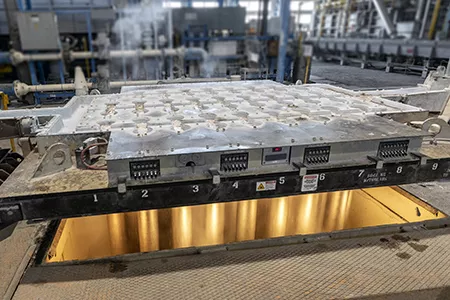
Thermal Barrier Protection
One of the primary functions of protective coatings is to act as a thermal barrier. These types of protective coatings minimize heat transfer by insulating the underlying substrate from the intense heat of molten metals. This is crucial for preventing the substrate from reaching critical temperatures. If it occurs, the result could be thermal degradation or structural failure.
Oxidation Resistance
Protective coatings enriched with elements like aluminum and chromium provide excellent oxidation resistance. When exposed to high temperatures, these elements can form a stable oxide layer on the coating’s surface. This layer serves as a shield preventing further oxidation and corrosion induced by the molten metal and its environment.
Wetting Resistance
A protective coating's ability to reduce wetting and adhesion by molten metals can prevent the metal from penetrating and bonding to the substrate. Protective coatings with non-wettable surfaces, such as those containing fluoropolymers or silicon carbide, alter the surface energy characteristics. Therefore, they can reduce the molten metal’s tendency to spread and adhere. This property is particularly valuable in applications like die-casting and welding, where metal runoff and splatter are common.
Sacrificial Protection
Some protective coatings are designed to offer sacrificial protection. In this approach, the protective coating material is selected to preferentially react with or erode due to exposure to molten metal. This can spare the underlying substrate. Materials such as magnesium oxide (MgO) or certain ceramics can react or fuse with molten metals. Together they form a slag that effectively blocks further interactions between the molten metal and the substrate.
Mechanical Barrier
Beyond chemical and thermal protection, coatings act as a mechanical barrier. This physical layer shields the substrate from direct exposure to molten metals. It prevents immediate damage from contact and the associated mechanical stresses of thermal expansion. The integrity and thickness of the protective coating are critical in ensuring it can withstand the impact and erosive forces of flowing molten metal.
Lubricity
Boron nitride (BN) coatings specifically provide lubricating aspects with a low coefficient of friction. They can reduce the amount of “stickiness” or any reactivity between two surfaces; molten or solid. It also allows better movement of molten fluid, which in turn prevents surface microcracks.
Factors Influencing Coating Performance
The effectiveness of a protective coating in resisting molten metal attack depends heavily on several factors:
- Material Composition: The chemical properties of the coating material determine its resistance to heat, oxidation, and chemical attack.
- Thickness: Thicker coatings generally provide better protection but may be susceptible to cracking because of differential thermal expansion.
- Application Method: Techniques such as thermal spraying, physical vapor deposition (PVD), or chemical vapor deposition (CVD) influence the protective coating’s uniformity, adhesion, and overall defensive qualities.
CeraGlide SF+ is the ideal solution for environments involving direct contact with molten metals. The combination of its exceptional properties can meet the rigorous demands of metal processing. This advanced boron nitride protective coating is designed to offer superb thermal and chemical stability, which is crucial for withstanding the extreme conditions typical in molten metal applications. Its outstanding lubrication, substrate adhesion, and release properties facilitate a smooth flow of molten metals and ensure longer-term durability, while still maintaining easy release from molds and dies, significantly enhancing operational efficiency.
If you have additional questions about application best practices, please download our technical bulletin or contact our technical support team.
Moreover, CeraGlide SF+'s high-temperature resistance ensures it retains its integrity and performance even under severe conditions. This makes it an excellent choice for critical processes such as metal casting, hot working, and atomization. With CeraGlide SF+, industries can achieve superior protection and functionality, driving productivity while safeguarding valuable equipment.
Strengthen Your Defenses Against Molten Metal By Incorporating the CeraGlide SF+
At Saint-Gobain, we understand the challenges you face in molten metal applications. That is why we have developed CeraGlide SF+, a boron nitride protective coating designed to thrive under the harsh conditions of metal processing. With its exceptional thermal and chemical stability, CeraGlide SF+ ensures your operations run smoothly and efficiently. Its excellent lubrication, substrate adhesion, and release properties allow for seamless molten metal flow. They also facilitate easy mold and die release, which can ultimately boost your productivity. Additionally, its robust high-temperature resistance means that CeraGlide SF+ maintains its integrity and performance. This is even in the most demanding environments. Visit our metal casting landing page to learn more about how CeraGlide SF+ can enhance operational efficiency and protect equipment.